Introduction: Why Strong Nails Start in the Kitchen
If your nails peel, split, or break no matter how many oils or treatments you apply, the issue may not be on the surface at all. Nails are living structures made primarily of keratin, and like hair and skin, they depend heavily on internal nutrition to grow strong and resilient. One nutrient consistently linked to nail strength and growth is biotin, also known as vitamin B7.
Biotin plays a central role in keratin production and cellular metabolism. While supplements are widely marketed for nail health, research suggests that many people can support healthier nails simply by eating biotin-rich foods regularly – without megadoses or unnecessary pills.
This article explores how biotin supports nail health, what science actually says about its effectiveness, the best natural food sources, and how to build a nail-strengthening diet that works in harmony with your body.
Understanding Nail Structure and Nutrition
Nails grow from the nail matrix, where specialized cells rapidly divide and harden into keratin. Because this process is metabolically active, it requires:
- Adequate protein
- B vitamins (especially biotin)
- Minerals like zinc and iron
- Healthy fats
When the body lacks key nutrients, nails are often among the first places to show it – through brittleness, slow growth, ridges, or splitting.
Biotin doesn’t act alone, but it plays a foundational role in supporting the enzymes involved in keratin infrastructure.
What Is Biotin and Why Does It Matter for Nails?
Biotin is a water-soluble B vitamin that helps convert carbohydrates, fats, and proteins into energy. More importantly for nails, it supports:
- Keratin synthesis
- Cellular turnover
- Structural protein integrity
Because biotin isn’t stored in large amounts in the body, consistent intake matters.
What Research Shows
Clinical studies have found that individuals with brittle nails often show improvement in thickness and hardness after increasing biotin intake – especially in those who were deficient. While not everyone needs supplementation, adequate dietary biotin is essential for maintaining nail integrity.
Signs You May Be Low in Biotin
True biotin deficiency is rare, but marginal intake can still affect nails. Possible signs include:
- Brittle or splitting nails
- Slow nail growth
- Hair thinning
- Dry or flaky skin
- Fatigue
Dietary patterns that limit whole foods, eggs, or healthy fats may increase risk.
The Best Biotin-Rich Foods for Nail Strength
1. Eggs (Especially the Yolk)
Egg yolks are one of the most bioavailable natural sources of biotin. One whole egg provides approximately 10 micrograms, about one-third of the daily adequate intake for adults.
Why they help nails:
- Biotin supports keratin production
- Protein supplies amino acids for nail structure
- Sulfur-containing compounds strengthen keratin bonds
Tip: Cook eggs fully – raw egg whites contain avidin, which can interfere with biotin absorption.
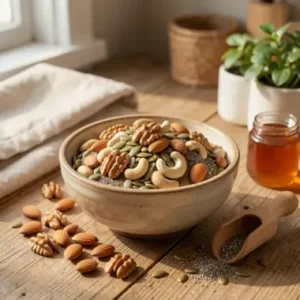
2. Nuts: Almonds, Walnuts & Peanuts
Nuts are nutrient-dense and provide biotin along with vitamin E and healthy fats.
- Almonds: ~1.5 mcg per serving
- Walnuts & peanuts: modest but consistent sources
Why they help nails:
- Biotin + fats improve nail flexibility
- Vitamin E supports nail bed circulation
- Minerals aid keratin stability
A small handful daily can contribute meaningfully to nail health.
3. Seeds: Sunflower & Flaxseeds
Sunflower seeds are among the richest plant-based sources of biotin, offering 2-3 mcg per tablespoon.
Benefits:
- Biotin supports growth
- Zinc helps prevent nail splitting
- Omega-3s reduce dryness
Add them to salads, yogurt, or smoothies for easy intake.
4. Sweet Potatoes
While not extremely high in biotin, sweet potatoes support nail health indirectly by providing:
- Vitamin A (cell turnover)
- Complex carbohydrates (energy for growth)
- Antioxidants that protect nail matrix cells
They work synergistically with biotin-rich foods.
5. Oats
Whole oats contain small but consistent amounts of biotin and are rich in silica and iron – both associated with nail strength.
Why oats matter:
- Support keratin formation
- Improve blood flow to nail beds
- Provide sustained energy for growth processes
Choose steel-cut or rolled oats over refined versions.
6. Legumes: Lentils, Chickpeas & Soybeans
Legumes provide biotin along with protein, iron, and zinc.
Nail-supporting benefits:
- Protein supports keratin structure
- Iron helps oxygen delivery to the nail matrix
- Biotin aids cellular metabolism
They’re especially valuable for plant-based diets.
7. Avocados
Avocados offer a modest amount of biotin, but their real power lies in their monounsaturated fats, which help improve nutrient absorption and nail flexibility.
Why they help:
- Support moisture retention in nails
- Improve fat-soluble vitamin absorption
- Reduce brittleness
Pairing avocados with biotin-rich foods enhances overall effectiveness.
8. Mushrooms
Certain mushrooms, including button and shiitake varieties, contain biotin along with B vitamins and selenium.
Benefits for nails:
- Support cellular regeneration
- Provide antioxidants for nail bed health
- Add variety to biotin intake
Light cooking improves digestibility.
9. Bananas
Bananas contain small amounts of biotin plus potassium and vitamin B6, which supports protein metabolism.
While not a primary source, they complement a nail-friendly diet.
10. Salmon & Fatty Fish
Salmon doesn’t top the biotin charts, but it supports nail health through:
- Protein
- Omega-3 fatty acids
- Vitamin D
Healthy fats help maintain nail plate flexibility and reduce cracking.
How Much Biotin Do You Actually Need?
The adequate intake (AI) for biotin is:
- 30 mcg per day for adults
Most balanced diets that include eggs, nuts, seeds, and whole foods can meet this requirement without supplementation.
Excess biotin is excreted in urine, but very high supplemental doses may interfere with certain lab tests – another reason food sources are preferred.
Biotin Supplements vs. Biotin-Rich Foods
While supplements are popular, food-based biotin offers several advantages:
- Comes with complementary nutrients
- Lower risk of excessive intake
- Better long-term absorption
- Supports overall health, not just nails
Supplements may be helpful in diagnosed deficiencies, but for most people, dietary biotin is sufficient and safer.
Supporting Biotin with Complementary Nutrients
Biotin works best alongside:
- Protein (keratin building blocks)
- Zinc (nail repair)
- Iron (oxygen delivery)
- Omega-3s (flexibility)
- Hydration (prevents brittleness)
No single nutrient works in isolation.
Lifestyle Factors That Affect Nail Strength
Even with adequate biotin, nails can suffer if:
- Hands are constantly wet
- Cuticles are over-trimmed
- Nails are used as tools
- Harsh chemicals are used without gloves
Nutrition sets the foundation, but daily habits protect the results.
How Long Does It Take to See Results?
Nails grow slowly. With consistent biotin-rich eating:
- Improved texture: 3-4 weeks
- Reduced breakage: 6-8 weeks
- Visible growth changes: 2-3 months
Patience is key – new growth reflects today’s nutrition.
Common Myths About Biotin & Nails
Myth: More biotin = faster growth
Truth: Adequate intake matters more than excess
Myth: Only supplements work
Truth: Food-based biotin is highly effective
Myth: Brittle nails are purely genetic
Truth: Nutrition plays a major role
Conclusion: Feed Your Nails for Long-Term Strength
Strong, healthy nails aren’t built overnight – or from polish alone. They’re the result of consistent nourishment, and biotin-rich foods provide a natural, research-supported way to support nail growth from within.
By incorporating eggs, nuts, seeds, legumes, whole grains, and healthy fats into your daily routine, you give your nails the tools they need to grow stronger, smoother, and more resilient over time. Instead of chasing quick fixes, focusing on nutrition creates results that last – because healthy nails are grown, not applied.