Waking up stiff can feel discouraging before the day has even begun. Whether it’s tight fingers, creaky knees, or a general sense of heaviness in the joints, morning stiffness is a common experience – especially as we age, exercise intensely, sit for long hours, or manage inflammatory conditions. While persistent or severe stiffness should always be evaluated by a healthcare professional, many people seek gentle, supportive rituals that can complement medical care.
One such ritual is ginger and turmeric tea – a warm, golden infusion rooted in traditional medicine and increasingly explored in modern research. This simple blend combines two powerful rhizomes known for their anti-inflammatory and antioxidant properties. While it is not a cure for arthritis or chronic disease, it may help support comfort, mobility, and overall well-being when incorporated into a balanced lifestyle.
Let’s explore why morning stiffness happens, how ginger and turmeric work in the body, and how to prepare this soothing tea effectively and safely.
Why Morning Stiffness Happens
Morning stiffness often results from a combination of factors:
- Reduced movement during sleep
- Mild joint inflammation
- Fluid shifts within tissues overnight
- Muscle tightness or postural strain
- Chronic inflammatory conditions
When we sleep, joint lubrication decreases due to reduced movement. Synovial fluid – the fluid that cushions joints – circulates less efficiently overnight. For people with inflammatory conditions such as osteoarthritis or autoimmune-related joint disorders, inflammatory mediators can accumulate during periods of inactivity, contributing to stiffness upon waking.
Additionally, cortisol – the body’s natural anti-inflammatory hormone – follows a circadian rhythm. While it typically rises in the early morning, the timing and levels may not fully counterbalance inflammatory signals in some individuals.
The result? Tightness, discomfort, and reduced range of motion that gradually improves with movement.
Gentle stretching, warm showers, and light activity often help. Warm beverages, particularly those with anti-inflammatory compounds, may provide additional comfort.
Ginger: A Natural Anti-Inflammatory Root
Ginger (Zingiber officinale) has been used for thousands of years in traditional Chinese and Ayurvedic medicine. Modern research supports many of its traditional uses, particularly in the context of inflammation and pain.
The primary bioactive compounds in ginger include:
- Gingerols
- Shogaols
- Zingerone
Gingerols, in particular, have demonstrated anti-inflammatory and antioxidant effects in laboratory and clinical studies. They appear to influence inflammatory pathways by inhibiting certain enzymes involved in prostaglandin and leukotriene production – chemical mediators that contribute to inflammation and pain.
Several clinical studies have explored ginger supplementation for osteoarthritis-related knee pain. While results vary, many show modest reductions in pain and stiffness compared to placebo. Though tea contains lower concentrations than standardized extracts, regular consumption may still provide gentle support.
Ginger also promotes circulation and has mild warming properties, which may contribute to the soothing sensation people experience when drinking it.
Turmeric: The Golden Root of Inflammation Research
Turmeric (Curcuma longa) is another rhizome widely used in traditional medicine. Its bright yellow color comes from curcumin, a polyphenol with strong anti-inflammatory and antioxidant properties.
Curcumin has been studied extensively for its potential effects on:
- Joint pain
- Inflammatory conditions
- Oxidative stress
- Muscle soreness
Research suggests that curcumin may inhibit nuclear factor-kappa B (NF-κB), a protein complex involved in regulating inflammation. It may also reduce levels of inflammatory cytokines and enzymes associated with tissue degradation.
Several clinical trials comparing curcumin supplementation to nonsteroidal anti-inflammatory drugs (NSAIDs) for knee osteoarthritis have shown comparable reductions in pain and stiffness in some populations- though these studies typically use concentrated extracts rather than culinary doses.
One important consideration: curcumin has relatively low bioavailability. It is absorbed and metabolized quickly. However, combining turmeric with black pepper (which contains piperine) can significantly enhance absorption. Consuming turmeric with a small amount of fat may also improve bioavailability.
Why Ginger and Turmeric Work Well Together
When combined, ginger and turmeric create a synergistic blend:
- Both target inflammatory pathways
- Both provide antioxidant protection
- Both offer digestive support
- Both promote a warming, circulation-enhancing effect
While neither ingredient alone eliminates stiffness overnight, together they may gently support reduced inflammatory signaling and improved comfort over time.
Importantly, consistency matters. The benefits of anti-inflammatory foods and herbs tend to accumulate gradually rather than producing immediate dramatic effects.
The Role of Warmth in Morning Comfort
Beyond their chemical properties, the warmth of the tea itself may play a role in reducing stiffness.
Heat therapy is commonly recommended for stiff joints because it increases blood flow, relaxes muscles, and enhances tissue elasticity. Drinking a warm beverage first thing in the morning may provide a mild internal warming effect that complements stretching and movement.
This sensory experience – warmth spreading through the body – can signal relaxation and ease.
How to Make Ginger & Turmeric Tea
Here is a balanced, effective preparation:
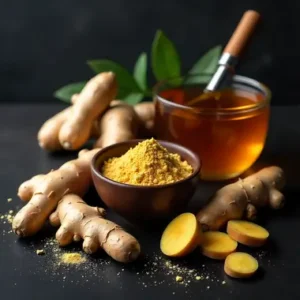
Ingredients:
- 1 cup water
- 1 teaspoon freshly grated ginger (or ½ teaspoon dried ginger)
- ½ teaspoon ground turmeric (or 1 teaspoon freshly grated turmeric root)
- A pinch of freshly ground black pepper
- Optional: ½ teaspoon honey
- Optional: a squeeze of lemon
- Optional: a small splash of coconut or almond milk
Instructions:
- Bring water to a gentle boil.
- Add ginger and turmeric.
- Simmer for 10-15 minutes.
- Strain into a cup.
- Add black pepper and optional ingredients.
The black pepper enhances curcumin absorption, while honey and lemon add flavor and additional antioxidant properties.
For convenience, you can prepare a larger batch and store it in the refrigerator for up to two days, reheating as needed.
What Does Research Say About Morning Stiffness?
Clinical studies on ginger and turmeric often focus on joint pain and inflammatory markers rather than specifically “morning stiffness.” However, improvements in stiffness scores have been reported in trials involving osteoarthritis patients taking standardized extracts.
It is important to note:
- Most research uses concentrated supplements rather than tea.
- Effects are generally modest but meaningful.
- Results vary by individual.
Tea offers lower doses but may still contribute as part of an anti-inflammatory dietary pattern rich in whole foods, healthy fats, and antioxidants.
Safety and Precautions
While ginger and turmeric are generally safe in culinary amounts, consider the following:
- High doses may cause digestive discomfort.
- Turmeric may interact with blood-thinning medications.
- Ginger may affect blood sugar and blood pressure.
- Individuals with gallbladder disease should consult a healthcare provider before using turmeric regularly.
If you have a chronic medical condition or take prescription medication, consult your healthcare provider before making herbal remedies part of your routine.
Supporting Morning Mobility Holistically
Ginger and turmeric tea works best alongside other supportive habits:
- Gentle morning stretching
- Light movement or walking
- Anti-inflammatory diet rich in fruits, vegetables, and omega-3 fats
- Adequate sleep
- Stress management
Chronic inflammation is influenced by lifestyle factors including diet quality, physical activity, and stress levels. A single beverage cannot override these factors, but it can support them.
The Ritual Matters
Perhaps one of the most powerful aspects of ginger and turmeric tea is the ritual itself.
Taking ten minutes each morning to prepare a warm, golden infusion encourages mindfulness. It signals the start of the day with intention rather than urgency. That psychological shift can influence how we experience discomfort.
Research in pain science shows that perception of pain and stiffness is influenced by mood, stress, and expectation. A calming ritual may indirectly reduce perceived discomfort by lowering stress hormones and increasing parasympathetic activity.
In this way, the tea becomes more than a beverage – it becomes a practice.
Final Thoughts
Morning stiffness is common, but it does not have to define the start of your day. While ginger and turmeric tea is not a medical treatment, it offers a research-supported combination of anti-inflammatory compounds, antioxidant protection, and comforting warmth.
Over time, as part of a balanced routine, this golden blend may gently support joint comfort and mobility. Combined with movement, hydration, and a nutrient-rich diet, it becomes one piece of a holistic approach to wellness.
Sometimes the most effective habits are also the simplest: a quiet kitchen, steam rising from a cup, and a moment of warmth before stepping into the day.